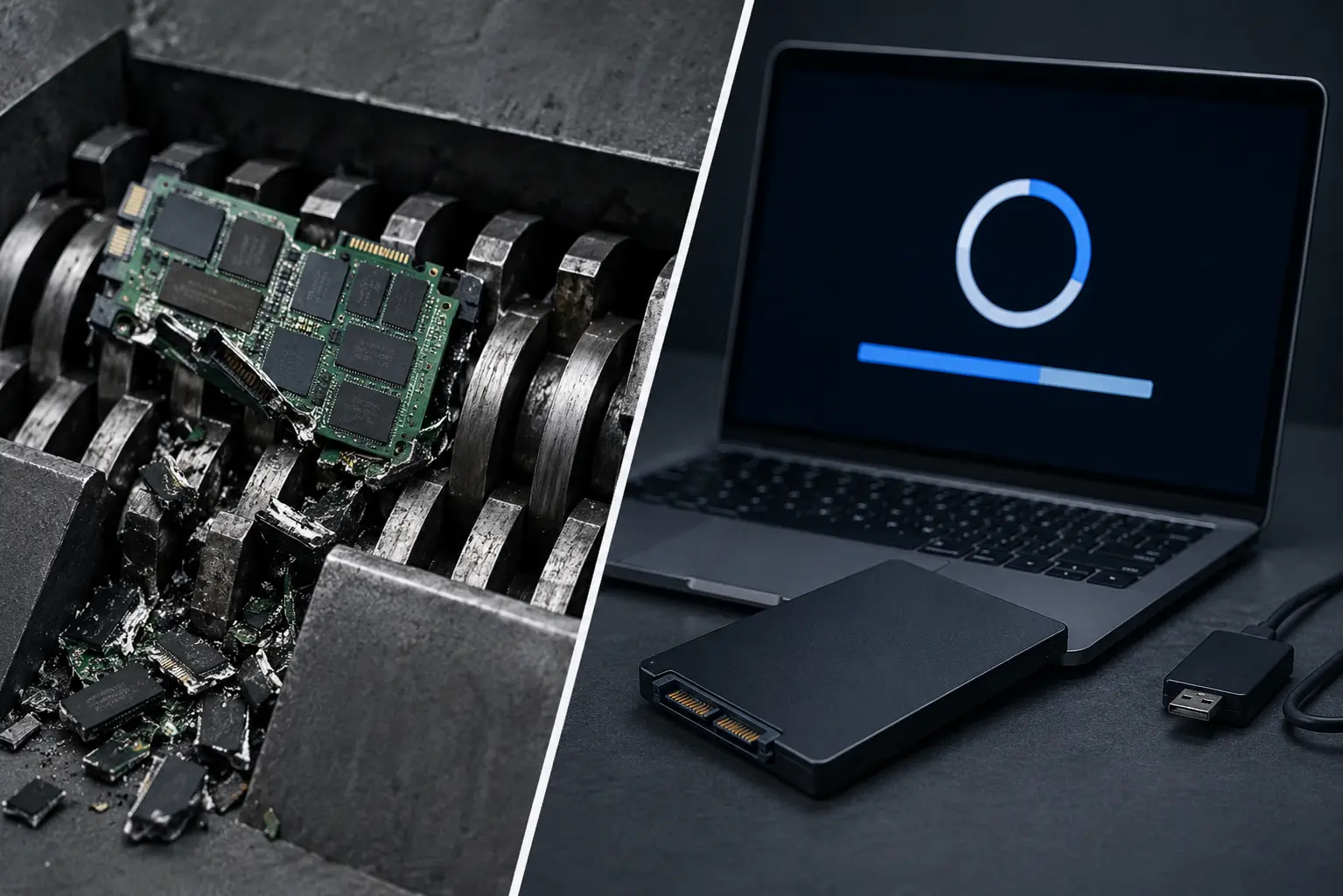
The strategic management of end-of-life information technology assets has undergone a profound transformation within the corporate landscape of the United Kingdom. As organizations operating in London and the surrounding economic zones navigate the complexities of the 2026 digital economy, the secure disposal of data-bearing devices is no longer relegated to a rudimentary facilities management task; it is recognized as a fundamental pillar of corporate risk mitigation, legal compliance, and cybersecurity architecture. The physical destruction of storage media, encompassing traditional Hard Disk Drives (HDDs), high-density Solid-State Drives (SSDs), magnetic backup tapes, and auxiliary electronic components, remains the only legally defensible and technologically absolute method to guarantee data irrecoverability.
The contemporary regulatory environment governing data privacy has become uncompromisingly punitive, demanding rigorous adherence to established data protection frameworks. The Information Commissioner’s Office (ICO) has systematically escalated its enforcement actions throughout 2025 and into 2026, aggressively targeting organizations that fail to demonstrate an unbroken, auditable chain of custody during the decommissioning and disposal of IT assets. Furthermore, the introduction of the Data (Use and Access) Act 2025 has redefined the financial stakes of data mismanagement, explicitly bringing disposal-related incidents and unauthorized post-lifecycle access into its regulatory scope. This legislation establishes catastrophic maximum penalties for negligent data exposure, scaling up to £17.5 million or four percent of an enterprise’s global annual turnover, whichever is greater. Against this formidable legislative backdrop, historical reliance on basic data deletion, partition formatting, or rudimentary software wiping is universally recognized by security professionals as dangerously inadequate; widely available forensic recovery tools can effortlessly reconstruct partitioned data from formatted drives in a matter of minutes.
Consequently, the commercial demand for professional hard drive shredding services in London has experienced exponential growth. Enterprises, legal firms, financial institutions, and public sector organizations are required to navigate a highly fragmented matrix of service models, compliance certifications, and logistical variables to ascertain the most secure and economically viable disposal strategies. The financial architecture of hard drive destruction in London is inherently complex, characterized by dynamic pricing models that are heavily influenced by aggregate volume, the selected service modality (on-site versus off-site), the architectural complexity of the storage media, and the depth of the required cryptographic or physical audit trail.
This exhaustive research report systematically delineates the structural costs associated with hard drive destruction in London for the year 2026. By comprehensively analyzing the macroeconomic factors, localized transport logistics, evolving regulatory updates, and technological variables that dictate market pricing, this document provides IT directors, procurement specialists, and compliance officers with an authoritative resource. The ultimate objective is to facilitate highly informed procurement decisions while establishing rigorous topical authority regarding secure IT asset disposal (ITAD) within the Greater London area.
The Macroeconomics and Logistics of Data Destruction in London
Pricing a secure logistical service that operates within the geographical confines of the Greater London area requires an intricate analysis of unique municipal pressures, transport tariffs, and environmental legislation that do not apply with equal severity across the broader United Kingdom. Service providers must navigate a highly regulated logistical ecosystem, and these operational realities invariably establish the baseline pricing structures passed on to the consumer.
Transport for London (TfL) Levies and Fleet Electrification
The deployment of heavy goods vehicles (HGVs), mobile industrial shredding units, and secure collection fleets into central London is heavily dictated by Transport for London (TfL) policies, which have undergone significant revisions in 2026. Effective January 2, 2026, the daily Congestion Charge applied to vehicles entering the central zone increased from £15.00 to £18.00, representing the first structural increase to this specific tariff since 2020. Concurrently, the expansive operational radius of the Ultra Low Emission Zone (ULEZ) enforces uncompromising emissions standards across all London boroughs, levying an additional £12.50 daily penalty on non-compliant commercial vehicles.
To mitigate these escalating municipal taxes and align with corporate sustainability mandates, leading ITAD providers are aggressively capitalizing on governmental incentives to transition their commercial fleets to electric vehicles (EVs). Under the phased TfL regulations implemented in 2026, electric vans, HGVs, and specialized mobile shredding trucks registered for Auto Pay benefit from a tiered 50 percent discount on the standard Congestion Charge, effectively reducing the daily central access burden to £9.00. However, the immense initial capital expenditure required to electrify entire fleets of heavy industrial vehicles combined with the complex logistical challenge of charging these vehicles within the urban grid functions as a macroeconomic counterweight. This high barrier to entry and sustained operational overhead maintains a rigid floor on the baseline costs of commercial collection services across the capital, heavily influencing the minimum call-out fees charged to London-based enterprises.
Furthermore, the implementation of London’s updated Vision Zero road safety plan introduces additional logistical complexities. Transport authorities have systematically expanded 20mph zones and reduced speed limits on the capital’s fastest arterial roads from 50mph to 40mph in a concerted effort to eliminate fatal road collisions. Concurrently, there are impending proposals to levy supplementary charges on larger, oversized utility vehicles and SUVs due to the disproportionate risk they pose to pedestrians. For secure data destruction providers, these traffic calming measures inherently increase the transit time required between collection points. Reduced routing efficiency directly translates to higher labor costs per collection route, a factor that is meticulously calculated into the final quotation provided for on-site mobile shredding or ad-hoc secure collections within the M25 corridor.
The Circular London Initiative and WEEE Compliance
Beyond the immediate mechanics of data security, the commercial viability of hard drive destruction in London is inextricably linked to the downstream processing of the shredded particulate, a process governed by stringent Waste Electrical and Electronic Equipment (WEEE) regulations. The United Kingdom currently generates an excess of 1.6 million tonnes of electronic waste annually, a figure that continues to compound as the lifecycle of consumer and enterprise electronics accelerates. Improper disposal of this highly toxic material to landfill is not only environmentally catastrophic but strictly prohibited by law.
London’s municipal authorities are actively pursuing aggressive environmental targets under the “Circular London” initiative, a comprehensive framework spearheaded by ReLondon a strategic partnership between the Mayor of London and the constituent London boroughs. The central vision of this initiative dictates that by 2026, absolute zero biodegradable or recyclable waste will be permitted to enter landfill sites, forcefully pushing the capital toward a fully realized zero-waste, circular economy.
Consequently, the pricing of certified hard drive destruction in London is not merely a fee for shredding; it inherently subsidizes the complex downstream processing required to responsibly recycle the resulting debris. Once an industrial shredder reduces a batch of hard drives to particulate matter, the resulting amalgamation of aerospace-grade aluminum, steel, rare earth neodymium magnets, and shredded printed circuit boards (PCBs) must be meticulously separated. This material is subsequently transported to specialized regional smelting facilities or Energy from Waste (EfW) plants located near London, where it is either refined to recover critical raw materials (CRMs) or incinerated under highly controlled conditions to generate electricity that feeds back into the national grid.
The financial dynamics of this recycling process are undergoing significant structural changes in 2026 due to sweeping reforms to UK Extended Producer Responsibility (EPR) regulations. The introduction of eco-modulated fees, determined by the Recyclability Assessment Methodology (RAM), is shifting broader systemic waste management costs onto the original producers of electronic equipment. However, the rigorous environmental compliance, digital waste tracking (DWT) mandates, and specialized facility permits required by waste transfer stations operating in and around London ensure that the recycling component of IT asset disposal remains a highly structured, heavily audited, and capital-intensive process. Top-tier destruction providers often offset the costs of physical shredding by ethically extracting and commodifying the residual value of these recovered base metals, allowing them to offer more competitive baseline destruction rates for high-volume corporate clients.
Core Pricing Models and Cost Benchmarks for 2026
The commercial evaluation of hard drive destruction cost in London reveals a highly stratified pricing matrix. Providers structure their financial offerings across three primary modalities: per-item transactional pricing, volumetric or batch consolidation, and recurring contracted collection schedules. The fundamental determining factor in standard pricing is the selected deployment method: off-site facility destruction versus on-site mobile destruction.
Baseline Cost Structures by Deployment Method
Off-site destruction, wherein secure storage media is collected and transported to a centralized, highly fortified processing facility, represents the most economically efficient baseline for data destruction. By centralizing heavy industrial shredding machinery, providers leverage massive economies of scale and continuous operational throughput that simply cannot be replicated within the spatial constraints of a mobile shredding truck. Conversely, on-site destruction involves the dispatch of purpose-built heavy goods vehicles equipped with integrated hydraulic shredders directly to the client’s corporate premises. This commands a distinct premium, compensating for the high logistical overhead, extended technician deployment times, and the provision of immediate, visually verifiable destruction at the client’s location.
The prevailing industry pricing parameters for hard drive destruction services in London for 2026 are detailed in the following analysis:
| Service Modality | Average Cost Per Unit (2026) | Market Dynamics and Applicability |
| Off-Site Hard Drive Destruction | £5.00 – £15.00 per drive | Highly cost-effective for standard corporate batches. Relies heavily on the integrity of the secure chain-of-custody transport protocols. |
| On-Site Hard Drive Shredding | £10.00 – £25.00 per drive | A premium, high-assurance service providing immediate visual verification at the client’s London premises, eliminating all transit risks. |
| High-Volume Bulk Processing | £3.00 – £8.00 per drive | Substantial economies of scale applied exclusively to high-volume clearances (typically 100+ units), utilized for data center decommissioning or major enterprise IT refreshes. |
| Baseline Minimum Collection Fees | £38.00 – £75.00+ per visit | A foundational logistical fee applied to all small-scale collections to offset vehicle dispatch, fuel, TfL levies, and administrative setup costs. |
| Ancillary Media (Mobile Devices) | £10.00+ per unit | Specific pricing for the disposal of mobile phones and tablets containing highly dense embedded flash memory, which requires specialized destruction handling. |
Granular pricing structures across various London-based operators demonstrate minor variances based on specific operational capacities and the integration of auxiliary services. For instance, basic secure destruction billed strictly per individual hard drive can be sourced for approximately £6.00 per unit, though this is universally contingent upon a minimum collection threshold, frequently set around £38.00 excluding VAT to ensure route profitability.
Organizations requiring ongoing, scheduled collections often utilize fixed-schedule bin exchanges or lockable consoles. The operational fees for servicing these high-security consoles which frequently integrate the disposal of physical confidential documents alongside electronic media originate from approximately £65.00 per scheduled visit. Ad-hoc sack collections, predominantly utilized by small-to-medium enterprises (SMEs) for end-of-year corporate clearances or office relocations, generally commence at £75.00 per visit, encompassing the collection and subsequent off-site shredding of a pre-determined volume of secure sacks. Furthermore, specialized handling fees often apply to IT disassembly; for example, the manual labor required to physically extract a hard drive from a fully intact desktop tower or laptop chassis prior to destruction frequently incurs an additional surcharge of approximately £5.00 per unit.
Variables Dictating Quote Fluctuations
When London procurement teams solicit an IT recycling quote, they frequently encounter price variations that deviate from standard baseline estimates. These fluctuations are not arbitrary; they are driven by specific technological and administrative requirements :
1. Media Architectural Stratification: The internal physical architecture of the storage device fundamentally alters the operational complexity of the required destruction protocol. Traditional HDDs, which utilize spinning magnetic platters made of glass or light alloys, are relatively brittle and are readily processed and destroyed by standard industrial shearing mechanisms. In stark contrast, SSDs utilize densely packed NAND flash memory chips mounted directly onto a PCB. If an SSD is processed through a standard, legacy document or HDD shredder with a wide cutting tolerance, it is highly probable that tiny, data-bearing flash chips will slip through the cutting blades completely intact. Consequently, SSDs necessitate processing through highly specialized micro-shredders calibrated to produce debris smaller than 2mm, or they require advanced, time-consuming software sanitization protocols. This requirement for precision equipment and specialized handling frequently results in differentiated and elevated pricing models for SSD destruction compared to standard HDDs.
2. Granularity of the Compliance Audit Trail: The generation of a standardized, batch-level Certificate of Destruction is an industry-standard practice and is universally included at no supplementary charge by reputable providers. However, organizations operating within highly regulated sectors (such as legal, finance, or government) frequently require meticulous serial-level reconciliation. In this scenario, every individual hard drive is manually scanned, cross-referenced against the client’s internal asset register, and explicitly listed by its unique manufacturer serial number on the final certification document. This process provides absolute proof of destruction for every specific asset to satisfy rigorous ISO or governmental audits. However, the labor-intensive nature of this data entry, barcode scanning, and exception handling inherently increases the administrative overhead of the service, resulting in a higher cost per unit.
3. ITAD Bundle Efficiencies and Rebate Programs: Substantial cost optimizations are frequently achieved when secure hard drive destruction is integrated holistically into a broader IT Asset Disposition (ITAD) and WEEE recycling contract. Major providers often heavily subsidize or entirely waive the physical destruction fees if the client is simultaneously surrendering high-value, reusable IT equipment. For example, modern enterprise servers, commercial-grade laptops, and advanced networking infrastructure hold significant residual market value. Providers will execute certified data wiping on these devices, securely destroying any failed drives, and then refurbish and resell the hardware. The profits from this secondary market hardware buyback are used to offset the logistical costs of the secure collection, often resulting in revenue-generating rebates for the client rather than a net expenditure.
Regulatory Frameworks Dictating 2026 Destruction Standards
The financial investment in hard drive destruction is fundamentally an investment in regulatory compliance. In 2026, purchasing data destruction is not merely procuring a waste disposal service; it is the acquisition of legal indemnification against catastrophic regulatory failure. Organizations that procure services from unverified, non-accredited vendors expose themselves to severe legal liability under UK law.
UK GDPR and The Data (Use and Access) Act 2025
The foundation of modern data protection in the United Kingdom remains the UK General Data Protection Regulation (UK GDPR), implemented via the Data Protection Act 2018. This sweeping legislative framework mandates that any personal data held by an organization must be erased securely and permanently the moment it is no longer required for its original legally justified purpose.
However, the regulatory landscape was significantly hardened with the passage of the Data (Use and Access) Act 2025. This legislation modernized enforcement mechanisms and explicitly targeted the end-of-life lifecycle of corporate hardware. Under this 2025 mandate, disposal-related data breaches such as abandoning an intact server in a general waste stream or selling inadequately wiped laptops on the secondary market are subject to maximum statutory fines of £17.5 million or four percent of the organization’s global turnover. This severe punitive structure forces corporate IT departments to abandon informal disposal practices and mandates the use of highly certified, professional destruction services capable of proving absolute data elimination.
ISO 27001: Information Security Management Systems
ISO 27001 is the premier internationally recognized standard for Information Security Management Systems (ISMS). Within the context of IT asset disposal, an ISO 27001 certification indicates that the destruction provider does not merely own a shredding machine, but operates a systematic, heavily documented, and continuously audited approach to protecting sensitive information throughout every stage of the disposal lifecycle.
Specifically, ISO 27001 Annex A 8.10 dictates rigorous technical necessities for formalizing information deletion. To comply with this annex, providers must utilize software that meets military standards for overwriting, or utilize certified physical destruction, whilst maintaining exhaustive records of deletion. Providers operating under the strict parameters of ISO 27001 frameworks incur significantly higher administrative, training, and security overheads. While these costs are marginally reflected in their pricing structures, they offer enterprise clients unparalleled assurance of process integrity and a legally defensible posture in the event of an ICO audit.
BS EN 15713 and NIST 800-88
BS EN 15713:2009 is the specific British Standard governing the secure destruction of confidential material. This standard dictates strict, non-negotiable operational parameters that professional shredding services must adhere to. It mandates the comprehensive security vetting (including DBS checks) of all personnel handling data, specifies the structural security requirements of off-site destruction facilities (including mandatory 24/7 CCTV surveillance and multi-factor intrusion alarms), and dictates the precise maximum particulate sizes to which different physical materials must be shredded.
Furthermore, for organizations requiring international compliance, adherence to NIST 800-88 (National Institute of Standards and Technology) guidelines is frequently requested. This comprehensive framework provides the globally accepted scientific guidelines for media sanitization, detailing the exact methodologies required to achieve “Clear,” “Purge,” or “Destroy” states on electronic media, ensuring alignment with the highest international infosec standards.
The NCSC CAS-S 2026 Paradigm Shift
For organizations handling government-classified information, defense contracts, or highly sensitive corporate intelligence, compliance with the National Cyber Security Centre (NCSC) Commercial Product Assurance (CAS-S) standard is an absolute prerequisite. Historically, ITAD providers could self-certify their adherence to certain NCSC guidelines. However, in January 2026, the NCSC fundamentally altered the market by introducing sweeping updates to the CAS-S scheme, dramatically raising the bar for compliance.
The 2026 CAS-S update explicitly abolished the practice of self-certification. Providers are now subject to mandatory, rigorous, and highly intrusive independent evaluations conducted exclusively by accredited Cyber Resilience Test Facilities (CRTFs). These evaluations scrutinize not only the technical efficacy of the shredding machinery but the provider’s entire operational security apparatus, including chains of custody, personnel screening, and procedural integrity.
Most consequentially for pricing, the 2026 CAS-S standard dictates a severely reduced particle size for physical destruction. To combat increasingly sophisticated forensic reconstruction techniques utilized by state-sponsored threat actors, the standard mandates that high-security storage media must be shredded to particles strictly smaller than 2mm. Achieving this sub-2mm standard requires the deployment of immensely powerful, highly specialized granulators and micro-shredders. The massive capital expenditure required to procure, maintain, and independently certify this cutting-edge machinery fundamentally bifurcates the data destruction market. Providers maintaining 2026 CAS-S accreditation operate in a premium tier, and their pricing reflects the unparalleled security assurance required to process data classified at the HMG SECRET or OFFICIAL levels.
Technological Modalities of Data Sanitization and Physical Destruction
The colloquial term “hard drive destruction” is a catch-all phrase that encompasses a wide spectrum of distinct technological methodologies. Each modality carries a unique cost profile, operational speed, and compliance implication. Understanding the micro-mechanics of these processes is essential for procurement officers evaluating a 2026 pricing guide, as selecting the incorrect method can result in catastrophic data leaks or unnecessary financial expenditure.
Industrial Physical Shredding: The Definitive Solution
Industrial physical shredding is universally acknowledged as the “gold standard” of data destruction. This process utilizes massive hydraulic shearing mechanisms to catastrophically compromise the physical architecture of the storage medium, rendering it into thousands of unrecognizable fragments.
When processing traditional HDDs, the machinery effortlessly fractures the aluminum chassis, shatters the internal glass or metal magnetic platters where the data resides, and pulverizes the read/write heads and motor assemblies. However, as previously analyzed, the shredding parameters must be strictly recalibrated when processing solid-state technology (SSDs, NVMe drives, USB sticks, and mobile phones). Because a single intact NAND flash chip from an SSD can retain vast repositories of sensitive data, modern high-security shredders are engineered with incredibly tight cutting tolerances, reducing the material to a sub-2mm particulate scale. This microscopic fragmentation physically destroys the silicon wafer containing the data, making any form of data recovery theoretically and scientifically impossible.
Degaussing: Electromagnetic Disruption
Degaussing represents an entirely different technological approach to data destruction. This methodology involves placing magnetic storage media such as traditional HDDs, LTO backup tapes, and legacy floppy disks into a specialized chamber that generates an exceptionally powerful, high-density electromagnetic field. This intense magnetic pulse permanently realigns the magnetic domains on the drive’s platters, instantly and irreversibly obliterating all stored data. Furthermore, the pulse destroys the precise factory-written servo tracks and the drive’s internal firmware, rendering the unit completely and permanently inoperable.
While degaussing is highly effective and boasts rapid processing throughput for traditional magnetic media, it possesses a critical technological limitation: it is fundamentally incapable of destroying data on SSDs, optical media (CDs/DVDs), or flash drives. Because solid-state technology relies on integrated circuits and floating-gate transistors rather than magnetism for data retention, an SSD will emerge from a degausser completely unaffected, with all data perfectly intact. Consequently, as SSD adoption reaches absolute ubiquity in modern enterprise environments, the utility of degaussing as a standalone destruction method is rapidly diminishing, and it is almost always paired with subsequent physical shredding or crushing.
Hard Drive Punching and Crushing
Hard drive punching and crushing offer a rapid, localized method for physical destruction, frequently utilized by mobile on-site units. This process involves placing the hard drive into a hydraulic press that drives a hardened steel pin directly through the center of the chassis and the platters with immense pneumatic force.
This catastrophic impact shatters brittle glass platters into dust and severely deforms metal platters, simultaneously destroying the read/write actuator arm. This violently prevents the drive from ever spinning or being read by conventional computer hardware. While hard drive punching is highly effective at rendering the drive immediately non-functional and is highly cost-effective (often priced around £15 per unit for specialized EDR CCTM CESG Certified crushing), it is generally considered less exhaustive than full sub-2mm shredding. Advanced forensic laboratories equipped with magnetic force microscopes can theoretically recover data from the remaining intact platter surfaces of a punched drive, though the cost and expertise required to do so are astronomical. Therefore, punching is an excellent mid-tier security option prior to standard WEEE recycling, but is rarely deployed for highly classified government data.
Data Wiping and Cryptographic Erasure (Sanitization)
Data wiping, or sanitization, represents the sole non-destructive methodology within the ITAD ecosystem. This software-based process systematically targets every individual sector of a storage drive, overwriting the existing data with complex patterns of binary zeroes, ones, and pseudorandom algorithms. To achieve legal compliance, this process cannot be executed using standard consumer software; it must be performed utilizing highly certified, specialized erasure software (such as Blancco or ADISA-certified Red Key USB technology) that generates a cryptographically signed report verifying the absolute success of the overwrite across 100% of the drive’s sectors.
The paramount economic advantage of data erasure is the preservation of the physical asset. A successfully wiped drive remains fully functional, permitting the hardware to be refurbished, safely redeployed internally, or sold in the secondary commercial market. This operational model perfectly aligns with circular economy principles and enables providers to offer substantial hardware buyback rebates, drastically offsetting the overall cost of an IT refresh.
However, software wiping is not a universal solution. It is entirely unsuitable for drives suffering from mechanical failures, bad sectors, or severe firmware corruption, as the software cannot guarantee the overwrite of inaccessible sectors. Furthermore, due to the complex internal “wear-leveling” algorithms utilized by modern SSDs to extend their lifespan, verifying the complete erasure of an SSD is technologically difficult. Consequently, many highly risk-averse organizations consider the theoretical risk of remnant data on heavily used SSDs to be unacceptable, opting to bypass software wiping entirely and defaulting directly to physical shredding for all solid-state media.
| Destruction Methodology | Core Mechanism | Target Media | Key Strategic Advantage |
| Physical Shredding | Hydraulic shearing to fragments (sub-2mm for high security). | HDDs, SSDs, USBs, Phones, Tapes. | Irreversible, universally effective against all media types. |
| Degaussing | High-density electromagnetic pulse. | HDDs, LTO Tapes only. | Instantaneous sanitization of magnetic platters. |
| Punching/Crushing | Pneumatic steel pin driven through platters. | HDDs. | Rapid, highly visible physical disablement. |
| Data Wiping (Erasure) | Certified software overwriting all sectors. | Functional HDDs, SSDs. | Preserves hardware for resale, generating cost rebates. |
Strategic Procurement: On-Site vs. Off-Site Destruction in London
For London-based corporate procurement teams, the most consequential strategic decision determining the final cost of a data destruction contract is the selection between on-site and off-site service deployment. This decision requires a meticulous cost-benefit analysis, balancing raw budgetary expenditure against corporate risk tolerance, operational convenience, and internal governance mandates.
The Premium Security of On-Site Shredding
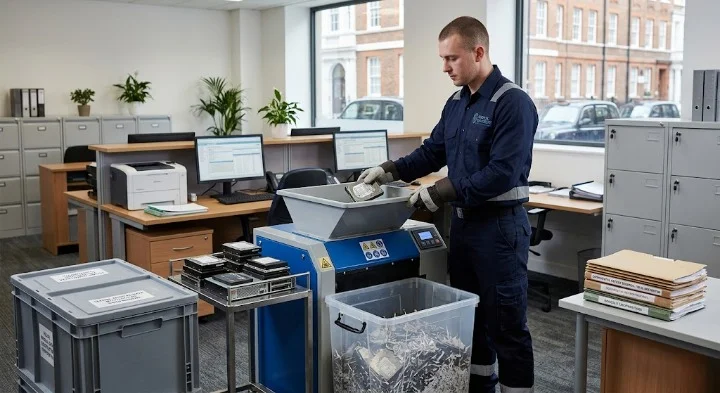
On-site hard drive shredding involves the logistical deployment of purpose-built, heavy-goods vehicles equipped with integrated industrial shredders or crushers directly to the client’s corporate location. Whether the client is situated in the densely populated City of London financial district, a corporate park in Canary Wharf, or the outer London boroughs, the mobile unit brings the destruction facility to the data.
The primary strategic advantage of on-site destruction is the total elimination of the transportation risk variable. The highly sensitive data never physically exits the geographical custody of the client until it has been reduced to unrecognizable physical fragments. This methodology permits corporate security officers, compliance teams, or designated stakeholders to physically witness the shredding process as it occurs, fulfilling the strictest internal governance policies and providing unparalleled peace of mind.
The operational execution involves highly vetted technicians conducting a localized inventory, transferring the assets to the mobile shredding unit parked outside the premises under continuous supervision, executing the destruction, and generating the official Certificate of Destruction immediately upon conclusion before the vehicle ever leaves the site.
However, this premium security posture inherently commands the highest pricing tier in the market (averaging £10.00 to £25.00 per unit, frequently coupled with substantial call-out fees). This elevated cost is directly attributable to the severe operational expenses of navigating heavy mobile shredding units through London’s congested traffic infrastructure, the extended duration of on-site technician deployment, and the premium associated with immediate, personalized service delivery. Furthermore, London’s complex architecture often presents logistical challenges; maneuvering a large, noisy industrial shredding truck into tight loading bays or restricted corporate plazas requires significant pre-collection planning.
The Economic Efficiency of Off-Site Destruction
Off-site data destruction represents the more common, economically optimized approach for the vast majority of businesses. This process requires the secure containment, collection, and transportation of intact storage media from the client’s London offices to a centralized, highly fortified processing facility located elsewhere in the UK.
While the physical media exits the client’s immediate premises, professional ITAD providers meticulously mitigate all transit risks. This is achieved through the deployment of heavily armored, GPS-tracked collection vehicles driven by DBS-checked security personnel. The hardware is transported using locked consoles or tamper-evident secure containers, operating under an unbroken, digitally tracked chain of custody. Upon arrival at the processing facility, the environment is secured by restricted biometric access points, continuous CCTV surveillance, and rigorous operational controls.
The fundamental advantage of off-site processing is its inherent cost-effectiveness, particularly for processing large corporate volumes. The centralization of massive, heavy-duty industrial shredding machinery allows off-site providers to leverage immense economies of scale, driving the per-unit cost down significantly (averaging between £3.00 and £15.00 per unit). Furthermore, off-site collection minimizes disruption to the client’s daily corporate operations. Bulk collections of thousands of drives can be loaded and removed swiftly, with the time-consuming processes of rigorous scanning, serial number verification, and physical shredding occurring asynchronously at the off-site depot, followed by the digital issuance of the comprehensive certification.
| Strategic Matrix | On-Site Shredding London | Off-Site Shredding London |
| Primary Advantage | Immediate visual verification and total elimination of transit risk. | High volume capacity, minimal operational disruption, and superior cost efficiency. |
| Ideal Deployment Scenario | Highly classified governmental data, legal/financial sectors requiring witnessed destruction. | Large-scale enterprise IT refreshes, data center decommissioning, routine SME office clearances. |
| Cost Profile (2026) | Premium pricing due to mobile vehicle dispatch and localized setup. | Highly economical pricing leveraging facility throughput and bulk efficiencies. |
Building a Secure ITAD Strategy with Computer Data Shred
In navigating the complex matrix of data security, London logistics, and environmental compliance, identifying an authorized, fully certified ITAD entity is paramount. Computer Data Shred operates as a premier end-to-end service partner, providing highly secure data shredding, comprehensive IT recycling, and complete office clearance services throughout London and the wider United Kingdom. By deeply integrating absolute information security protocols with aggressive environmental sustainability targets, Computer Data Shred effectively bridges the critical gap between rigorous GDPR compliance and the mandates of the Circular London zero-waste initiative.
Comprehensive Service Portfolio and Technical Capabilities
Computer Data Shred commands a highly versatile service portfolio specifically engineered to neutralize data risks across all contemporary and legacy storage mediums. Their operational capabilities are designed to scale from localized SME clearances to massive corporate data center decommissioning:
- Advanced Hard Drive and SSD Shredding: Computer Data Shred deploys state-of-the-art industrial shredding technology capable of physically obliterating traditional HDDs and modern high-density solid-state media. Their precision machinery ensures total fragmentation of storage components, definitively preventing any possibility of forensic data reconstruction.
- On-Site and Off-Site Operational Flexibility: Catering directly to the highly varying risk profiles of London businesses, Computer Data Shred offers both highly visible on-site mobile shredding—executed directly at the client’s London premises—as well as secure, heavily tracked off-site destruction at their centralized processing facilities.
- Military-Grade Sanitization Protocols: For governmental agencies, defense contractors, or highly regulated financial institutions operating in the capital, Computer Data Shred provides military-grade destruction processes supported by an impenetrable, fully documented chain of custody.
- Degaussing and Certified Data Wiping: Utilizing incredibly powerful magnetic fields to instantaneously neutralize magnetic media, operated alongside certified software wiping tools for IT assets that hold residual value and are slated for ethical redeployment or corporate resale.
- Server Array and Mobile Device Processing: The deployment of specialized, labor-intensive protocols for the secure decommissioning of complex server arrays and the exacting destruction of modern mobile devices containing embedded flash memory, ensuring all data is destroyed prior to final recycling.
Unwavering Commitment to Compliance and Certification
The operational backbone of Computer Data Shred’s entire London operation is an uncompromising, exhaustive adherence to United Kingdom law and international information security standards. Their specialized GDPR data destruction services are architected from the ground up to shield corporate organizations from the catastrophic financial penalties associated with data breaches under the Data (Use and Access) Act 2025.
Every successful destruction protocol executed by Computer Data Shred is formally concluded with the issuance of an official Certificate of Destruction. This legally binding document serves as an essential asset for corporate compliance officers, proving unequivocally that end-of-life data was handled by security-vetted professionals in strict accordance with UK regulations and ISO 27001 operational parameters.
Beyond stringent data security, Computer Data Shred actively champions corporate environmental responsibility. While maintaining a highly responsive operational footprint across London, their UK-wide collection logistics are fully compliant with complex WEEE directives. Shredded electronic components processed by Computer Data Shred are diverted entirely from landfills. Instead, the particulate is processed ethically through certified downstream channels, recovering highly valuable base metals and critical raw materials (CRMs), directly supporting the UK’s vital transition toward a sustainable, circular economy. For comprehensive IT lifecycle management, Computer Data Shred expertly handles the complex logistics of office IT removal and detailed asset reporting, ensuring seamless, secure transitions during major corporate technology refreshes.
Conclusion
The comprehensive determination of the hard drive destruction cost in London for the year 2026 transcends a simplistic analysis of commodity pricing. The financial expenditure required to securely decommission corporate IT assets represents a multi-faceted, strategic investment in rigorous risk mitigation, essential legislative compliance, and vital environmental stewardship. With baseline off-site shredding services commencing at approximately £5 to £15 per unit, and premium on-site mobile deployments scaling up to £25 per unit, organizations possess the inherent flexibility to carefully align their procurement strategies with their specific operational constraints and institutional risk tolerances.
However, the prevailing economic narrative dictating the market in 2026 is driven heavily by formidable external pressures. The escalating severity of ICO financial penalties under the newly enacted Data (Use and Access) Act 2025, combined with the stringent sub-2mm physical destruction tolerances mandated by the comprehensive 2026 NCSC CAS-S updates, establishes beyond a doubt that utilizing certified, highly accredited vendors is a non-negotiable insurance policy against catastrophic data breaches. Concurrently, the unyielding logistical realities of operating commercial fleets within the capital marked by the £18 daily Congestion Charge, stringent ULEZ emissions standards, and the ambitious zero-waste targets of the ReLondon initiative ensure that baseline collection costs remain highly resilient, forcefully pushing the ITAD industry toward sustainable, WEEE-compliant, and electrified operational models.
For London-based enterprises, legal practices, financial institutions, and public sector bodies, the most secure and strategic path forward requires forging enduring partnerships with comprehensive, highly certified providers like Computer Data Shred. Such entities possess the specialized infrastructure, technological capability, and operational maturity required to successfully navigate the highly complex intersection of ISO 27001 data security protocols, strict GDPR legal mandates, and aggressive circular economy objectives. By adamantly prioritizing verifiable destruction methodologies, demanding an unbroken, digitally tracked chain of custody, and requiring exhaustive certification, London businesses can absolutely safeguard their most sensitive digital assets while simultaneously contributing to the ethical, sustainable recycling of the nation’s critical electronic infrastructure.
Frequently Asked Questions (FAQ)
To further demystify the economic, legal, and technical nuances of hard drive destruction in London, the following section addresses the most prevalent inquiries generated by procurement teams, Chief Information Security Officers (CISOs), and IT professionals navigating the 2026 landscape.
1. Why is formatting a hard drive entirely insufficient for GDPR compliance?
Executing a standard or “quick” format on a hard drive merely overwrites the file system pointers that tell the operating system where data is located on the disk; it does not overwrite or destroy the actual binary data, which remains completely intact on the magnetic platters or flash memory chips. Widely available, low-cost data recovery software can easily map the drive and reconstruct this “deleted” information. Under the rigorous mandates of the UK GDPR and the Data Protection Act 2018, organizations must ensure permanent, irreversible data elimination. Physical shredding or certified cryptographic erasure are the only legally defensible methods capable of guaranteeing irrecoverability and shielding the organization from severe ICO penalties.
2. Why do Solid-State Drives (SSDs) typically cost more to destroy securely than traditional Hard Disk Drives (HDDs)?
SSDs pose highly unique physical and software challenges to destruction providers. Unlike older HDDs, which utilize large, fragile magnetic glass or metal platters, SSDs store vast amounts of data on dense, microscopic NAND flash memory chips soldered to a circuit board. If an SSD is processed through a standard, wide-cut shredder designed for HDDs, individual memory chips may easily pass through the blades physically intact, allowing gigabytes of sensitive data to be harvested from the debris. Therefore, SSDs require significantly more expensive, specialized micro-shredding machinery to reduce the material to a precise sub-2mm particle size. Furthermore, the internal “wear-leveling” algorithms utilized by SSDs to manage flash memory degradation make software sanitization far more complex to execute and verify reliably, frequently driving risk-averse organizations to mandate premium physical destruction methods.
3. What is the NCSC CAS-S standard, and how does the 2026 update directly affect market pricing?
The National Cyber Security Centre (NCSC) Commercial Product Assurance (CAS-S) is the definitive United Kingdom standard for the highly secure sanitization of storage media handling government-classified information. The sweeping January 2026 updates to this framework fundamentally altered the market by introducing mandatory, independent evaluations conducted by Cyber Resilience Test Facilities (CRTFs), explicitly outlawing provider self-certification. Crucially, the standard mandated strict sub-2mm particle sizes for the physical destruction of high-security media. ITAD providers must now invest heavily in advanced shredding machinery and fund continuous, expensive independent audits to maintain this critical accreditation. Consequently, services adhering to the 2026 CAS-S standard occupy the absolute premium pricing tier of the destruction market.
4. How do London’s specific transport policies (such as the Congestion Charge and ULEZ) impact basic collection costs?
Operating large commercial vehicles within the Greater London area carries massive, inescapable municipal overhead. As of January 2, 2026, the daily TfL Congestion Charge increased to £18.00, while non-compliant older vehicles face an additional £12.50 ULEZ fee simply to enter the zone. While modern ITAD providers utilizing electric heavy goods vehicles (HGVs) receive a 50 percent discount via Auto Pay, reducing the charge to £9.00, the immense capital cost required to electrify commercial fleets is ultimately factored into the service pricing. These localized logistical taxes establish a rigid floor on the baseline minimum collection fees (which typically range from £38 to £75) levied on London-based businesses to ensure routing remains profitable.
5. Does an organization receive legally binding documentation proving the hard drives were securely destroyed?
Yes. Following the completion of the destruction protocol, highly certified ITAD providers issue a formal, legally binding Certificate of Destruction. This critical document details the date, location, and method of destruction, serving as an essential audit artifact that proves the organization maintained full compliance with UK GDPR, BS EN 15713, and ISO 27001 data handling standards. For elevated security requirements, these certificates can be meticulously itemized by individual drive serial numbers, providing an unimpeachable record of destruction for every specific asset, though this serial-level reconciliation may incur a slight administrative premium.
6. What happens to the physical hard drive debris after it is passed through the industrial shredder?
The fragmented remnants of destroyed storage devices are absolutely not sent to landfill sites. Professional destruction services are deeply integrated with Waste Electrical and Electronic Equipment (WEEE) recycling protocols. The shredded material a highly complex mixture of aluminum, steel, rare earth magnets, and circuit board particulate is securely transported to specialized separation facilities. Here, the material is smelted or processed through advanced refinement techniques to recover critical raw materials (CRMs) such as gold, silver, palladium, and neodymium. Alternatively, non-recyclable fractions are incinerated at highly controlled Energy from Waste (EfW) plants to generate electricity, directly and tangibly supporting the “Circular London” environmental initiatives and minimizing the capital’s ecological footprint.