
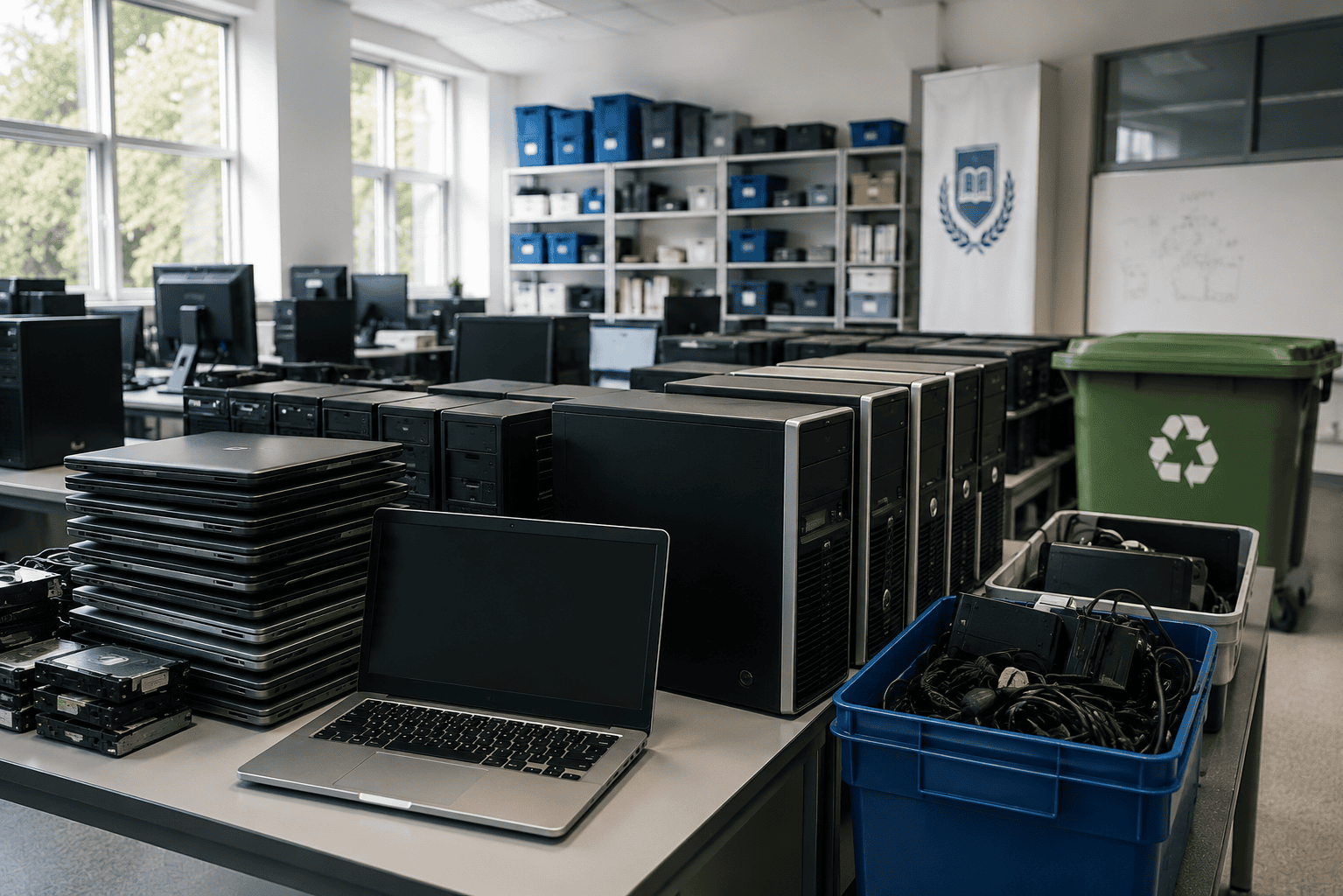
A university clearance may bring together office laptops, lab computers, servers, removable media and equipment from different departments. A shared inventory and clear authorisation help each team understand which assets can leave and what must happen to their data first.
Separate equipment by owner and purpose
Record the department, site, asset identifier, device type and intended destination. Flag leased devices, equipment supplied under a research agreement and machines that must be retained. Ask the relevant owner to review research data, personal information, licensed software and contractual requirements before approving any disposal route.
Decide how the data will be handled
Identify all storage in the batch, including drives removed from servers, backup tapes, external drives and storage embedded in other equipment. Decide which suitable devices may be prepared for reuse and which media are to be destroyed. Agree how unsuccessful erasures, unreadable media or unexpected storage will be reported. A device count alone is not enough to show what happened to its storage.
Coordinate multiple buildings
Give each collection a named contact, location and access window. Laboratories and secure rooms may have their own release process. Record what was handed over at each point, then compare it with the provider's processing records and follow up discrepancies. Ask about the available evidence before booking if you require an itemised record or witnessed work.
Our storage media destruction and data erasure pages explain the questions to consider for each route. Send the equipment types, quantities, site postcodes and record requirements so we can discuss availability. Talk to us about a clearance.
Further reading: ICO asset management guidance.
Planning a data clearance?
Send your material, quantity and postcode, along with the records your organisation needs. We will confirm the available options for your job.