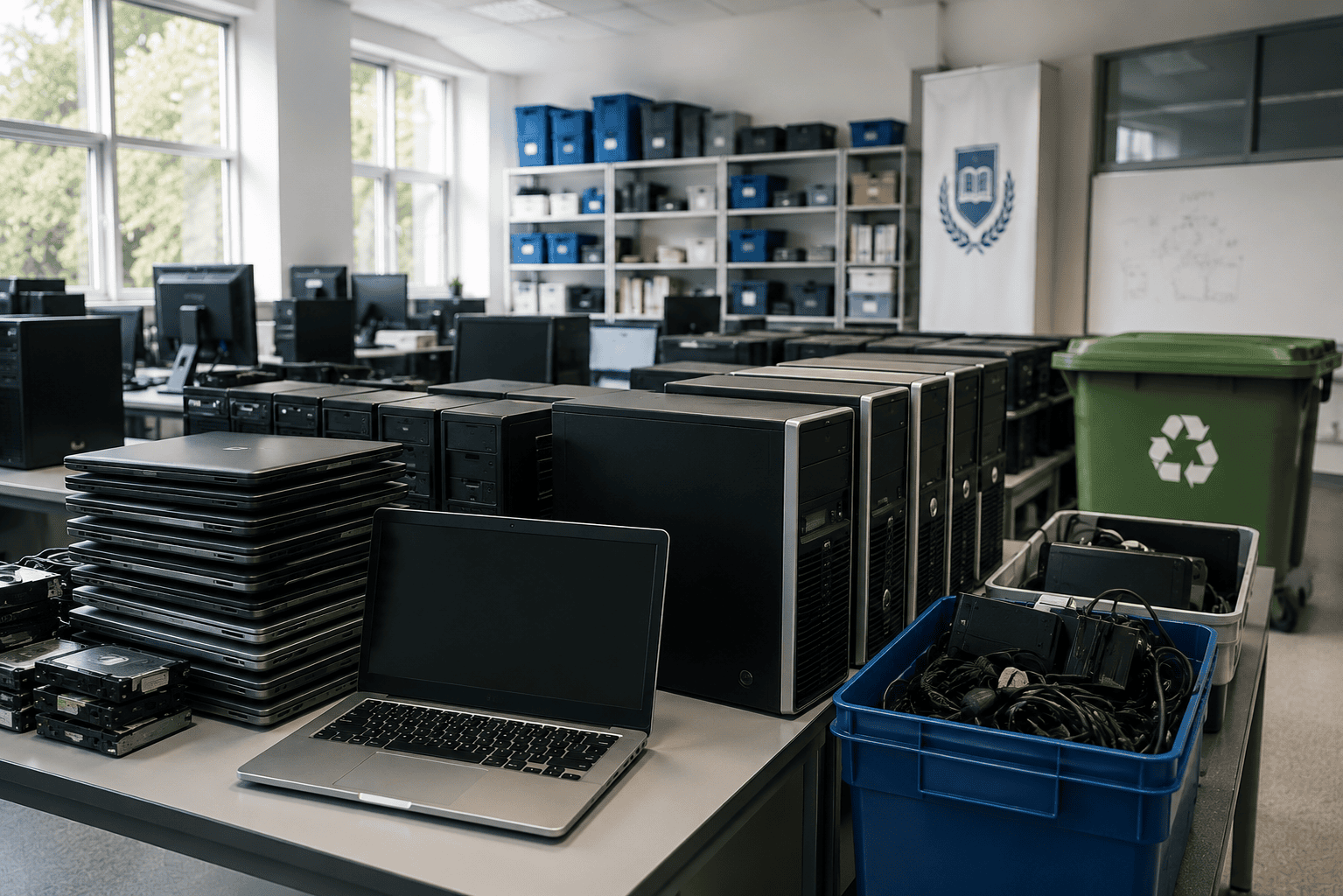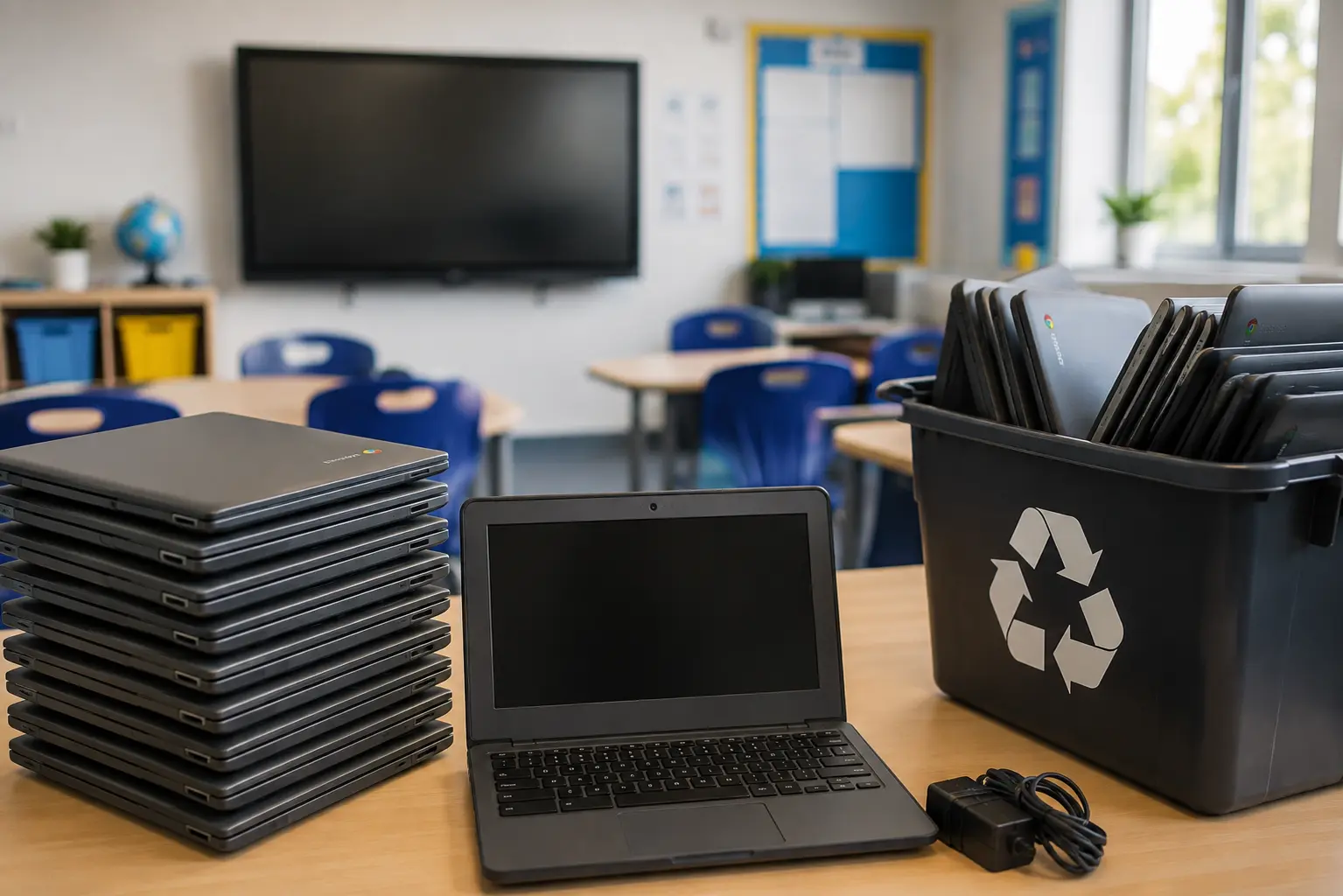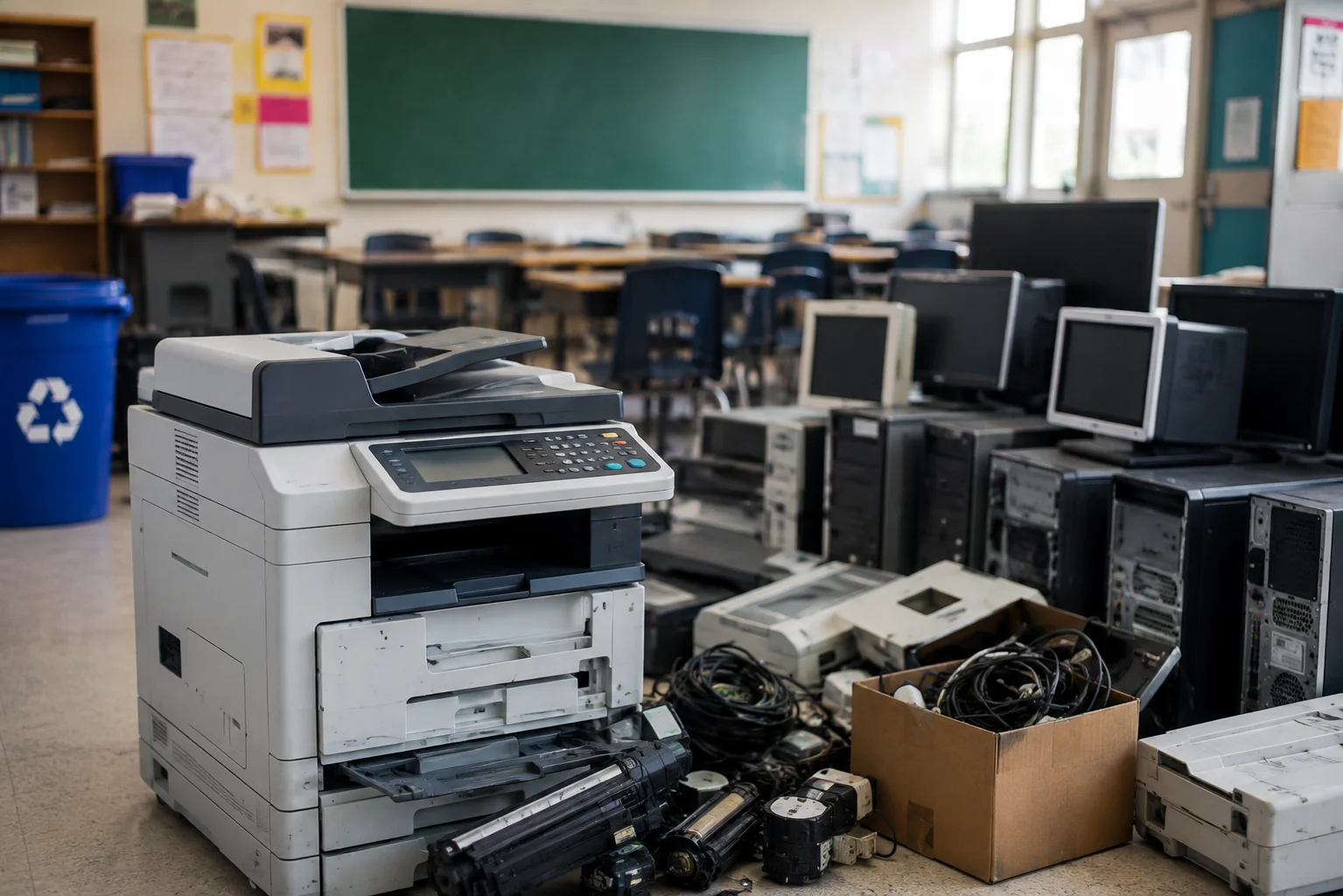
A university’s IT estate looks nothing like a school’s, and the disposal problem that comes with it is a different scale entirely. Instead of a few hundred Chromebooks and a couple of servers, you’re often looking at thousands of devices across departments, halls of residence, research labs, and administrative offices — each with different owners, different data on them, and different rules about who’s actually allowed to sign off on getting rid of them.
University IT asset disposal (ITAD) isn’t just a bigger version of a school’s process. Research data adds a layer of complexity that most other sectors don’t have to think about, and the sheer volume of devices moving through a university at any given time makes ad hoc disposal genuinely risky.
Why Universities Face a Different ITAD Problem
A few things make higher education distinct from schools, colleges, or standard office environments:
- Devices belong to lots of different owners. Central IT, individual departments, research groups, and even external funding bodies can all have a stake in how a specific piece of equipment gets retired.
- Research data isn’t like standard business data. It can be tied to funding conditions, data sharing agreements, ethics approvals, or commercial confidentiality — sometimes with retention or destruction requirements written into the grant itself.
- Volume is constant, not occasional. Universities are rarely doing a single annual clearout. Devices come off lease, get replaced, or reach end of life continuously across the academic year.
- A wide mix of hardware types. Standard laptops and desktops sit alongside lab equipment, specialist research computers, servers, and sometimes high-performance computing (HPC) infrastructure with very different destruction requirements.
- Student-owned and student-facing devices. Halls of residence, library loan laptops, and BYOD policies mean personal data moves through university-owned infrastructure in ways that don’t map neatly onto a standard staff device policy.
Research Data: The Part Generic ITAD Advice Doesn’t Cover
Most disposal guidance is written with standard business data in mind — customer records, financial files, HR data. Research data brings a few additional considerations that a generic approach misses.
Funding Body and Ethics Requirements
Research grants often come with specific data retention or destruction terms attached, sometimes with a defined retention period before destruction, and sometimes with restrictions on where and how data can be destroyed. Ethics approvals for studies involving human participants frequently include commitments about how identifiable data will eventually be handled. Disposal that ignores these terms isn’t just a data protection issue — it can breach the conditions of the funding or ethics approval itself.
Collaborative and Multi-Institution Data
Where research is conducted jointly with other institutions or industry partners, data ownership and destruction responsibilities may not sit entirely with the university. It’s worth confirming who’s actually authorised to sign off on destruction before a shared dataset or the hardware holding it gets disposed of.
Specialist Hardware
Lab equipment, research servers, and HPC storage don’t always follow standard consumer hard drive architecture. Confirming that a disposal provider can actually handle the specific storage media involved — rather than assuming a standard laptop process applies, matters more here than almost anywhere else in a university’s estate.
Bulk Device Disposal: Getting the Process Right at Scale
Volume changes what “good” disposal looks like. A process that works fine for ten devices often breaks down at a thousand.
Centralise Authorisation, Even If Devices Are Departmental
Individual departments may own their equipment, but disposal should still run through a consistent, central process. Otherwise, you end up with dozens of different informal arrangements across campus, no consolidated audit trail, and no way to confirm that every device that’s left the university has actually been accounted for.
Batch by Data Sensitivity, Not Just Device Type
Rather than treating “all laptops” the same way, it’s worth grouping devices by what they actually held — general admin equipment, student-facing devices, and anything that touched research data each warrant a slightly different level of scrutiny before disposal.
Decide Reuse vs. Destruction Early
At university scale, the financial case for reuse is significant. Devices in good condition, properly wiped to a certified standard, can be resold, redeployed, or donated. Anything holding sensitive research data, or too old to have resale value, is better suited to physical destruction rather than relying on a wipe alone.
Plan Around the Academic Calendar
Bulk collections are far easier to manage between terms or during the summer break than mid-semester, when devices are in active use across teaching spaces, labs, and halls.
A Practical Process for University ITAD
- Build a central inventory covering every department, not just centrally-managed IT equipment.
- Flag devices connected to research data separately, and check funding or ethics conditions before assuming standard destruction timelines apply.
- Confirm authorisation for each batch, particularly where departments or external research partners have a stake in specific devices.
- Sort by reuse potential and sensitivity rather than processing everything identically.
- Match destruction method to hardware type, including specialist lab or research storage media that don’t follow standard laptop or desktop architecture.
- Collect certificates matched to serial numbers for every device, consolidated centrally even if disposal happens departmentally.
- Review annually, ideally aligned with procurement and lease cycles so device refreshes and disposal stay in step with each other.
Need to clear a batch of devices before term or year-end? Computer Data Shred collects and processes bulk university IT equipment across the UK, with full chain-of-custody tracking from pickup to certified destruction. Get a quote for your next collection →
Why Documentation Matters More at University Scale
With thousands of devices moving through a university’s estate each year, informal or undocumented disposal becomes very hard to audit after the fact. A certificate of destruction matched against a central inventory is what allows a university to answer, with confidence, exactly how any specific device — including one tied to a specific research project or funding body — was handled. Without that, a question from an auditor, a funding body, or a data subject access request becomes considerably harder to answer.
How This Fits Alongside Wider Education Sector ITAD
Universities share a lot of the same underlying obligations as schools and colleges — GDPR accountability, WEEE compliance, and the need for proper documentation — even though the scale and complexity of research data adds a layer schools don’t typically face. Our broader guide to ITAD for schools covers the equivalent process for the school and MAT sector, and much of the same batching and reuse logic applies to bulk student device disposal, similar to how we’ve covered it for Chromebook disposal.
Frequently Asked Questions
Does research data need to be destroyed differently from standard university data? Sometimes. Research data can carry specific retention or destruction terms tied to a funding grant or ethics approval, which may dictate timelines or methods beyond standard GDPR requirements. It’s worth checking those conditions before assuming a standard destruction process applies.
Who is responsible for authorising disposal when a department owns the equipment? Ideally, a central ITAD policy should apply across the university even where departments hold budget or ownership of specific devices. This avoids inconsistent informal disposal happening independently across different faculties.
Can university laptops and devices be resold or reused? Yes, and at university scale this is often financially significant. Devices in good condition, properly deprovisioned and wiped to a certified standard, can be resold, redeployed internally, or donated, provided they don’t hold sensitive research data with specific destruction requirements attached.
What happens to data on shared or collaborative research projects when hardware is disposed of? This depends on the data sharing agreement in place. It’s worth confirming which institution or partner is authorised to approve destruction before disposing of hardware tied to a joint research project, rather than assuming the university holding the physical device has sole authority.
How often should a university review its ITAD process? Most institutions benefit from an annual review, ideally aligned with procurement and lease renewal cycles, so device refreshes across departments stay consistent with how older equipment is being retired.
Final Thoughts
University IT asset disposal carries the same underlying obligations as any other sector — GDPR, WEEE, and documented proof of what happened to each device — but the scale and the research data involved make it a genuinely different challenge to manage well. Getting it right means centralising authorisation even when ownership is departmental, treating research data as its own category rather than folding it into standard business data rules, and matching destruction methods to the actual hardware involved rather than assuming one process fits everything from a staff laptop to an HPC storage array.
Done properly, disposal becomes a routine part of the academic calendar rather than a recurring compliance risk — which, at the volume most universities are dealing with, is really the only version of this process that scales.
Ready to plan your university’s next ITAD collection? Speak to our team about secure, certified disposal for research data, lab equipment, and bulk devices across your campus — or call 0330 341 0786 to discuss your requirements.